
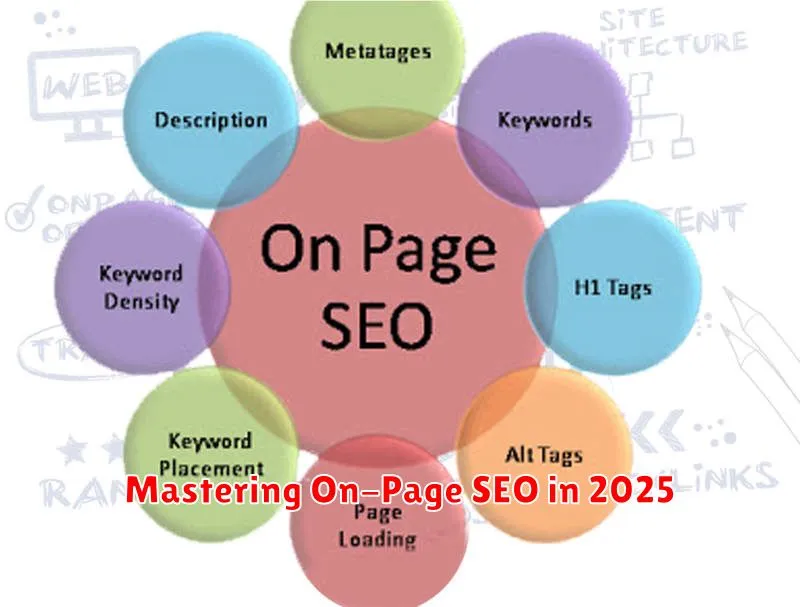
In the ever-evolving digital landscape of 2025, mastering on-page SEO is more critical than ever for online success. On-page SEO encompasses all the actions you take directly on your website to improve its search engine rankings and visibility. This includes optimizing elements like content, HTML tags (title tags, meta descriptions, header tags), URL structure, and internal linking. Failing to prioritize on-page optimization can severely limit your website’s potential to reach its target audience. This comprehensive guide will equip you with the knowledge and strategies needed to conquer on-page SEO in 2025 and drive organic traffic to your website.
From understanding the fundamentals of keyword research and content optimization to mastering technical aspects like schema markup and mobile-first indexing, this article covers every aspect of on-page SEO. Whether you’re a seasoned SEO professional or just starting your journey, the insights provided here will empower you to optimize your web pages effectively. Learn how to create high-quality content that satisfies both search engines and users, improve your website’s technical SEO, and ultimately achieve higher rankings in search engine results pages (SERPs) in 2025. Embark on your path to on-page SEO mastery today and unlock the true potential of your online presence.
What Is On-Page SEO?
On-page SEO encompasses all the measures taken directly within a website to improve its search engine rankings and visibility. It’s about optimizing both the content and the HTML source code of a page.
On-page optimization focuses on factors under your direct control, unlike off-page SEO which deals with external factors like backlinks. By making targeted adjustments to elements on your pages, you can signal to search engines what your website is about and why it deserves a prominent position in search results. This ultimately leads to increased organic traffic—visitors coming to your site from unpaid search listings.
Key on-page elements include things like content quality, keyword optimization, title tags, and meta descriptions. Getting these elements right is crucial for both search engine crawlers and user experience. Search engines use these signals to understand and rank your content, while users rely on them to determine the relevance and value of your site.
Optimizing Title Tags and Meta Descriptions
Title tags and meta descriptions are crucial elements of on-page SEO. They directly influence how search engines understand and present your web pages in search results. Optimizing these elements is essential for attracting clicks and driving organic traffic.
Title tags are concisely displayed on search engine result pages (SERPs) as the clickable headline for a given result. They should accurately reflect the page’s content and incorporate relevant keywords. Keep title tags under 60 characters to avoid truncation.
Meta descriptions provide a brief summary of the page’s content, appearing below the title tag in SERPs. While not a direct ranking factor, compelling meta descriptions can significantly improve click-through rates. Aim for descriptions between 150-160 characters while highlighting key benefits and including a clear call to action.
By crafting compelling and informative title tags and meta descriptions, you can effectively communicate the value of your content to both search engines and users, ultimately improving your website’s visibility and organic performance.
Using Header Tags Effectively
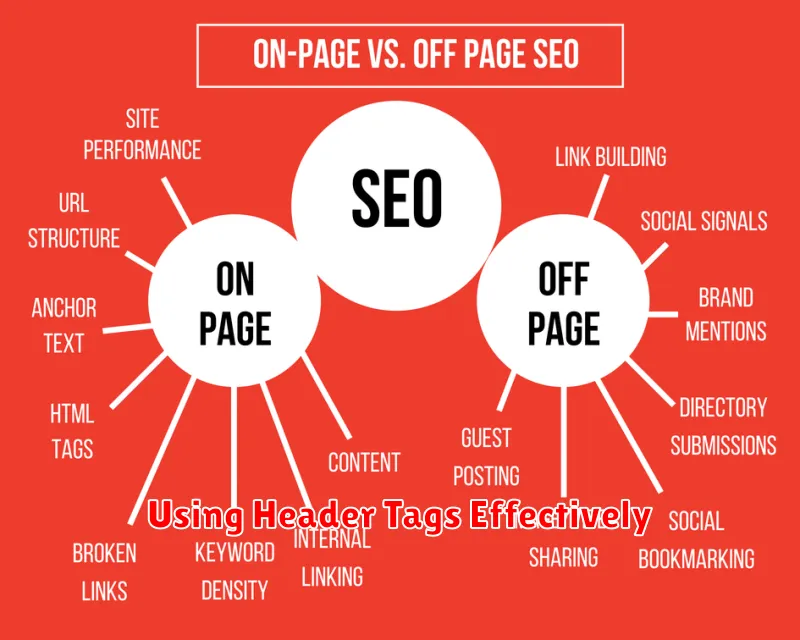
Header tags (H1-H6) structure your content and signal its importance to search engines. H1 tags define the main topic of a page, while H2-H6 tags create a hierarchical structure for subtopics.
Using header tags effectively means using them strategically, not just stylistically. Each page should have only one H1 tag, accurately reflecting the page’s primary focus. Subsequent header tags should follow a logical order, supporting and elaborating on the main topic.
Keyword integration within header tags is crucial. Incorporate relevant keywords naturally within your headers to improve search visibility. However, avoid keyword stuffing; prioritize clarity and readability.
Proper header tag usage contributes to improved user experience and SEO performance. They make content easier to scan and understand, while also providing valuable context for search engine algorithms.
Internal Linking Best Practices
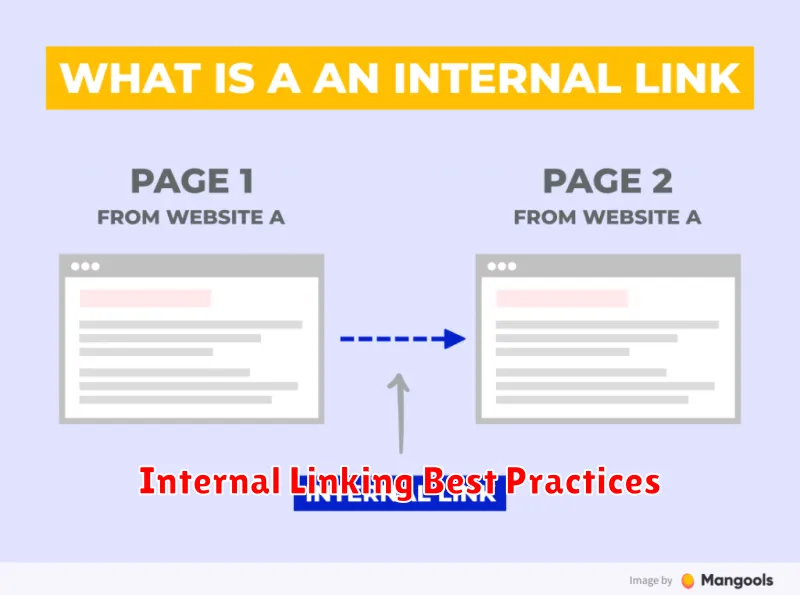
Internal linking is a critical component of on-page SEO. It helps search engines understand the structure and hierarchy of your website, distributing link equity and improving crawlability.
Follow these best practices to maximize the effectiveness of your internal linking strategy:
Contextual Linking
Always link relevant pages together. Links should occur naturally within the content, connecting related concepts and providing value to the user.
Anchor Text Diversity
Use a variety of anchor text. Instead of repeatedly using the same keywords, incorporate related terms and phrases. This appears more natural to search engines and improves the relevance of linked pages.
Link Depth
Ensure important pages are accessible within a few clicks from the homepage. A shallow link depth helps search engine crawlers efficiently index your content and signals the importance of these pages.
Avoid Excessive Linking
Don’t overdo it. While internal linking is important, too many links on a single page can dilute their value and confuse users. Focus on linking to the most relevant resources.
Image Optimization for SEO
Image optimization is a crucial aspect of on-page SEO. It contributes to improved page load speed, enhanced user experience, and increased search engine visibility.
File Size: Compressing images is essential for fast loading times. Use tools to reduce file size without sacrificing too much quality.
File Format: Choose the appropriate format. JPEG is generally best for photographs, while PNG is suitable for graphics with transparency. WebP is a modern format offering superior compression.
Alt Text: Descriptive alt text is vital for screen readers and search engines. Accurately describe the image’s content and context.
File Names: Use relevant keywords in your image file names. For example, “red-running-shoes.jpg” is better than “image123.jpg”.
Improving Content Relevance
Content relevance is a critical factor for on-page SEO in 2025. Search engines prioritize content that directly and comprehensively addresses a user’s search query. This means focusing on user intent and providing accurate and informative content that satisfies their needs.
Keyword research remains essential. Identifying relevant keywords and incorporating them naturally within your content helps search engines understand the topic and context of your page. However, keyword stuffing is detrimental and should be avoided. Focus instead on semantic SEO, which emphasizes using related terms and concepts to build a comprehensive understanding of the subject matter.
Understanding user intent is key. Analyze what users are actually searching for when they use specific keywords. Are they looking for information, products, or something else? Tailor your content to directly address their needs and provide the most relevant information.
Mobile Responsiveness and Speed
In 2025, mobile responsiveness is no longer a luxury, but a necessity. Google predominantly uses mobile-first indexing, meaning your site’s mobile version is the primary factor for ranking. A responsive design ensures your website adapts seamlessly to various screen sizes, providing a consistent user experience across devices.
Mobile speed is equally critical. Users expect fast-loading pages, and slow load times can lead to high bounce rates and negatively impact your search rankings. Optimize images, leverage browser caching, and minify code to enhance your site’s performance.
Consider using Google’s PageSpeed Insights tool to analyze your website’s performance and identify areas for improvement. Addressing these issues will contribute significantly to a positive user experience and improve your overall SEO.
