
Are you looking to harness the power of Google Ads to boost your business’s online visibility? This beginner’s guide provides a comprehensive overview of Google Ads, demystifying the process of creating and managing successful campaigns. Whether you’re a small business owner, marketing professional, or simply curious about online advertising, this guide will equip you with the essential knowledge to navigate the world of Google Ads and achieve your advertising goals.
Learn how to effectively use Google Ads to reach your target audience, optimize your campaigns for maximum ROI, and track your performance. From understanding the fundamentals of keywords and bidding strategies to mastering the nuances of ad copywriting and campaign tracking, this comprehensive guide is your one-stop resource for getting started with Google Ads. Embark on your Google Ads journey today and unlock the potential of reaching millions of potential customers.
Why Use Google Ads?
Google Ads is a powerful advertising platform that can help businesses of all sizes reach a wider audience and achieve their marketing goals. Whether you’re looking to increase brand awareness, drive traffic to your website, or generate leads and sales, Google Ads can be an effective solution.
One of the primary benefits of using Google Ads is its reach. With billions of searches performed on Google every day, your ads have the potential to be seen by a massive audience. This expansive reach allows you to connect with potential customers actively searching for products or services like yours.
Furthermore, Google Ads offers targeting options that allow you to focus your advertising efforts on specific demographics, interests, and locations. This ensures your ads are shown to the most relevant audience, maximizing your return on investment.
Finally, Google Ads provides measurable results. You can track key metrics such as clicks, impressions, and conversions, allowing you to monitor the performance of your campaigns and make data-driven adjustments.
Understanding Campaign Types
Choosing the right Google Ads campaign type is crucial for achieving your advertising goals. Different campaigns cater to different objectives, whether it’s driving website traffic, generating leads, or boosting online sales. Understanding these distinctions helps optimize your budget and maximize your return on investment (ROI).
Here are some common Google Ads campaign types:
- Search Campaigns: These ads appear alongside Google search results, targeting users actively searching for specific keywords related to your products or services.
- Display Campaigns: Display ads utilize visuals and appear across a vast network of websites, reaching a broader audience and increasing brand awareness.
- Video Campaigns: Run video ads on YouTube and other Google video partner sites to engage viewers with compelling video content.
- Shopping Campaigns: Designed specifically for retailers, these campaigns showcase product images and prices directly within search results, driving traffic to product pages.
- Performance Max Campaigns: A newer campaign type that automates ad placement across multiple Google platforms (Search, Display, YouTube, Gmail, Discover) using machine learning to optimize for conversions.
Selecting the appropriate campaign type depends on your specific business objectives and target audience. Consider factors like your desired reach, budget constraints, and the nature of your product or service.
Choosing the Right Keywords

Keyword selection is crucial for a successful Google Ads campaign. The right keywords connect your ads with potential customers actively searching for products or services like yours.
Start by brainstorming a list of terms your target audience might use when searching online. Think about different variations and related phrases.
Relevance is key. Choose keywords directly related to your offerings. Avoid overly broad terms, as they can lead to irrelevant clicks and wasted budget.
Consider search intent. Are users looking for information, ready to buy, or comparing options? Tailor your keywords accordingly.
Use keyword research tools to refine your list, analyze search volume, and identify relevant long-tail keywords (longer, more specific phrases).
Setting Up Effective Ads
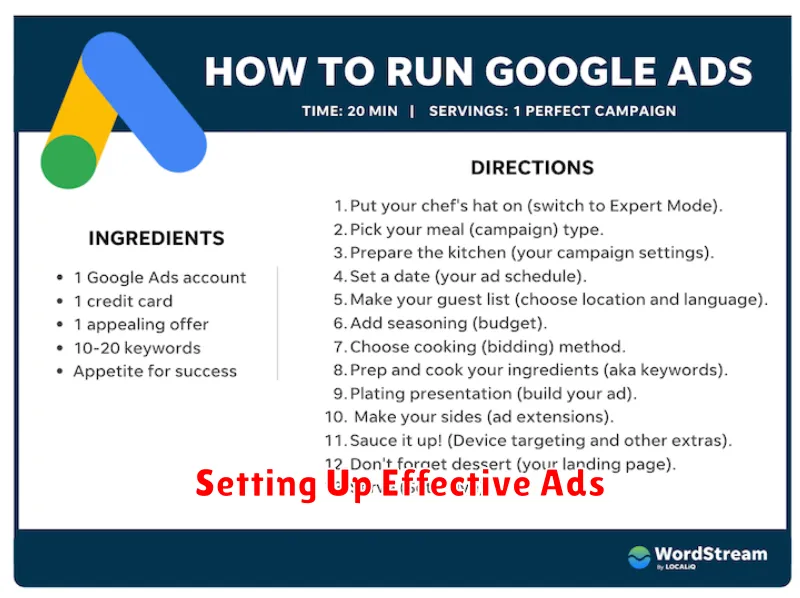
Creating effective Google Ads involves careful planning and execution. Keywords are fundamental. Choose relevant keywords that potential customers might use when searching for your products or services. Organize them into tightly themed ad groups for better performance.
Compelling ad copy is crucial. Clearly highlight your unique selling propositions and include a strong call to action. Match your ad copy to the user’s search intent to improve click-through rates.
Landing page experience is paramount. Ensure your landing page is relevant to the ad and provides a seamless user experience. A clear path to conversion, whether it’s a purchase, signup, or download, is essential.
Targeting options allow you to reach the right audience. Define your target demographic based on location, age, interests, and other factors to maximize your ad spend’s effectiveness.
Budgeting and bidding require strategic consideration. Set a daily or monthly budget that aligns with your marketing goals. Experiment with different bidding strategies to optimize your return on investment.
Tracking and Optimization
Tracking your Google Ads campaigns is crucial for understanding their performance. Google Ads provides built-in tools to monitor key metrics such as clicks, impressions, cost-per-click (CPC), and conversion rate. By analyzing this data, you can identify what’s working and what’s not.
Conversion tracking is particularly important. A conversion is a desired action taken by a user, such as making a purchase or filling out a contact form. Setting up conversion tracking allows you to measure how effectively your ads are driving these valuable actions.
Optimization is the ongoing process of improving your campaigns based on the data you collect. This might involve adjusting your bids, refining your targeting criteria, or testing different ad copy.
Regularly reviewing and optimizing your campaigns is essential for maximizing your return on investment (ROI).
Budgeting and Bidding Strategies
Setting the right budget and choosing the appropriate bidding strategy are crucial for Google Ads success. Budgeting determines your daily or monthly ad spend. Start with a comfortable amount and adjust based on performance.
Bidding determines how much you’re willing to pay for each click, impression, or conversion. Several bidding strategies exist, each designed for different campaign goals.
Common Bidding Strategies:
- Manual CPC: You set the maximum bid for each keyword, giving you granular control.
- Maximize Clicks: Google automatically sets bids to help you get as many clicks as possible within your budget.
- Maximize Conversions: Google sets bids to help you get the most conversions possible within your budget.
- Target CPA: You set a target cost-per-acquisition (CPA), and Google automatically sets bids to try and achieve that target.
Choosing the right strategy depends on your campaign objectives and experience level. Experimentation is key to finding what works best for your business.
