
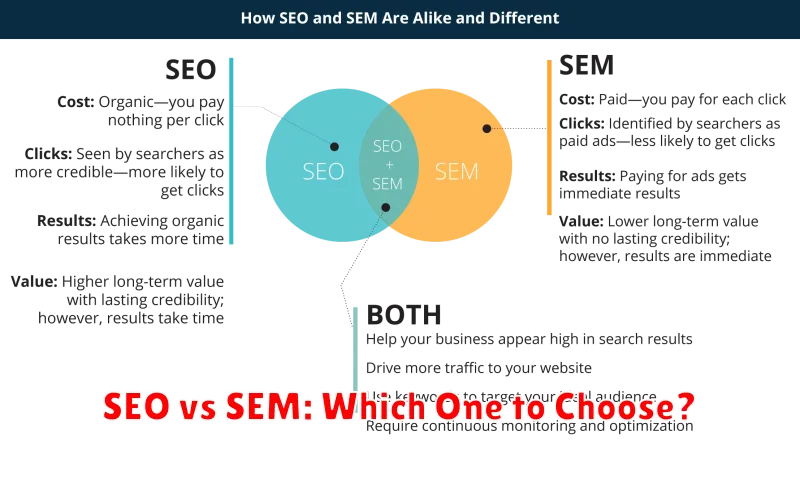
Navigating the digital landscape requires a robust online presence. Choosing the right strategy for online visibility is crucial for success. Are you struggling to decide between SEO (Search Engine Optimization) and SEM (Search Engine Marketing)? Understanding the nuances of each is paramount for maximizing your return on investment. This article delves into the core differences between SEO and SEM, providing you with the knowledge to make an informed decision for your business needs. Learn which strategy, or combination of strategies, will best propel your website to the top of search engine results pages (SERPs) and drive valuable traffic to your site.
Both SEO and SEM are powerful tools for increasing online visibility, but they employ different approaches. SEO focuses on organic traffic generation through optimizing website content and structure for search engine crawlers. SEM, primarily through paid advertising platforms like Google Ads, utilizes targeted ad campaigns to achieve immediate visibility on SERPs. This article will compare and contrast SEO and SEM, exploring their respective advantages and disadvantages, and guide you toward the most effective strategy for your specific goals. Whether you are aiming for long-term sustainable growth with SEO or seeking rapid results with SEM, this guide will equip you with the knowledge necessary to make a data-driven decision.
Understanding SEO and SEM
Before diving into the comparison, it’s crucial to understand what SEO and SEM entail. Search Engine Optimization (SEO) focuses on organically improving a website’s visibility in search engine results pages (SERPs). This involves optimizing website content, structure, and technical aspects to rank higher for relevant keywords.
Search Engine Marketing (SEM), on the other hand, encompasses all marketing efforts aimed at increasing visibility on search engines. This includes both organic strategies (SEO) and paid advertising. While SEO focuses on earning traffic through unpaid methods, SEM often utilizes paid search advertising to drive traffic quickly.
In essence, SEO is a subset of SEM. SEM is the broader term encompassing all search marketing activities, including SEO. A successful search strategy often involves a combination of both, leveraging the strengths of each approach.
When to Use SEO
Search Engine Optimization (SEO) is a long-term strategy that focuses on organically improving your website’s visibility in search engine results pages (SERPs). It’s best utilized when you’re aiming to build a sustainable online presence and establish your brand as an authority within your industry.
Consider prioritizing SEO when:
- You have a limited budget and cannot afford the ongoing costs associated with SEM.
- You are aiming for sustainable growth and long-term results.
- You want to build brand credibility and organic traffic.
- You have the time and resources to dedicate to a long-term strategy.
While results may take time to materialize, the benefits of SEO compound over time, resulting in a stronger online presence and increased organic traffic.
When to Use SEM
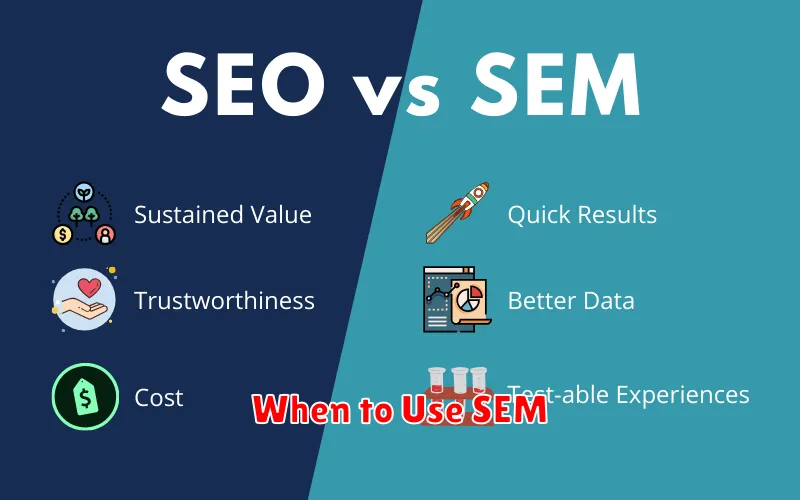
Search Engine Marketing (SEM) is a powerful tool, but it’s not always the right choice. Understanding when to leverage SEM is crucial for maximizing your return on investment. Generally, SEM is most effective when you need immediate visibility.
Consider using SEM if you are launching a new product or service and need to quickly gain market share. It’s also highly beneficial for time-sensitive campaigns, such as promotions or limited-time offers, where rapid results are essential.
If your business operates in a highly competitive industry, SEM can help you stand out and reach customers actively searching for relevant keywords. Finally, SEM provides valuable data and analytics, allowing you to track campaign performance and refine your targeting for better results.
Cost Comparison
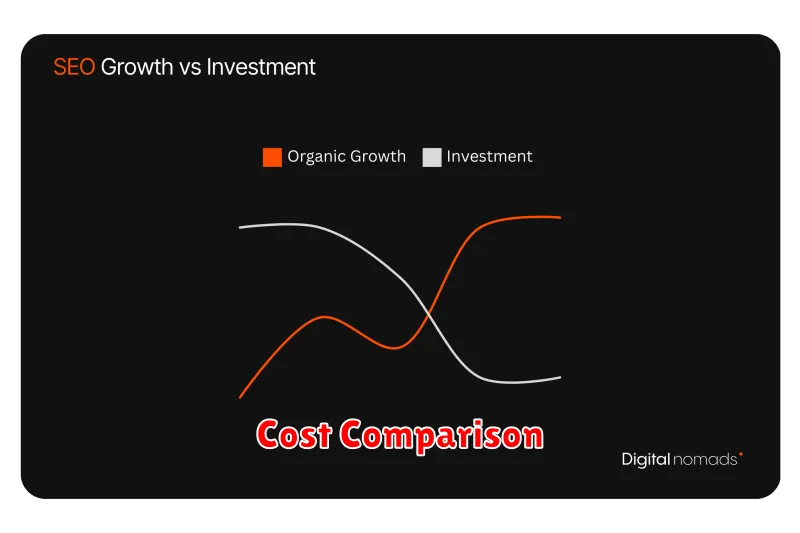
A key differentiator between SEO and SEM lies in their cost structures. SEO is generally considered a long-term, organic strategy with lower upfront costs. While there are expenses associated with content creation, technical optimization, and potentially SEO tools, it doesn’t involve direct payment to search engines for rankings.
SEM, primarily referring to paid search campaigns (like Google Ads), involves a direct cost per click (CPC). Businesses bid on keywords, and every time a user clicks on their ad, they incur a charge. The CPC can vary significantly based on factors like keyword competitiveness and industry.
Therefore, the initial investment for SEM can be higher than SEO. However, SEM offers immediate visibility, while SEO requires time and effort to see results. Ultimately, the most cost-effective approach depends on your specific business goals, budget, and timeline.
Combining Both Effectively
While both SEO and SEM offer distinct advantages, they can be incredibly powerful when used together. This integrated approach allows you to leverage the strengths of each strategy to maximize your online visibility.
SEO provides the foundation for long-term, organic growth, building a sustainable presence in search results. SEM, with its paid campaigns, offers the opportunity to quickly target specific keywords and drive immediate traffic, especially valuable for new websites or product launches.
Using SEM data can also inform SEO strategy. By analyzing which paid keywords convert effectively, you can refine your organic keyword targeting and content creation efforts. This allows you to optimize your SEO efforts for maximum impact.
Tracking and Measuring ROI
Tracking and measuring Return on Investment (ROI) is crucial for both SEO and SEM. Understanding which strategy delivers better returns informs future marketing budget allocation.
With SEM, ROI is generally easier to track. Platforms like Google Ads provide detailed data on ad spend, impressions, clicks, conversions, and cost per acquisition. This allows for precise calculation of ROI.
SEO ROI, while more challenging to measure directly, is still achievable. By tracking keyword rankings, organic traffic growth, and conversions attributed to organic search, you can estimate the return on your SEO investment. Utilizing analytics platforms and connecting SEO efforts to specific business outcomes is essential.
Comparing the ROI of both strategies requires considering differing timeframes. SEM typically delivers faster, more immediate results, while SEO is a long-term investment that yields compounding returns over time.
