
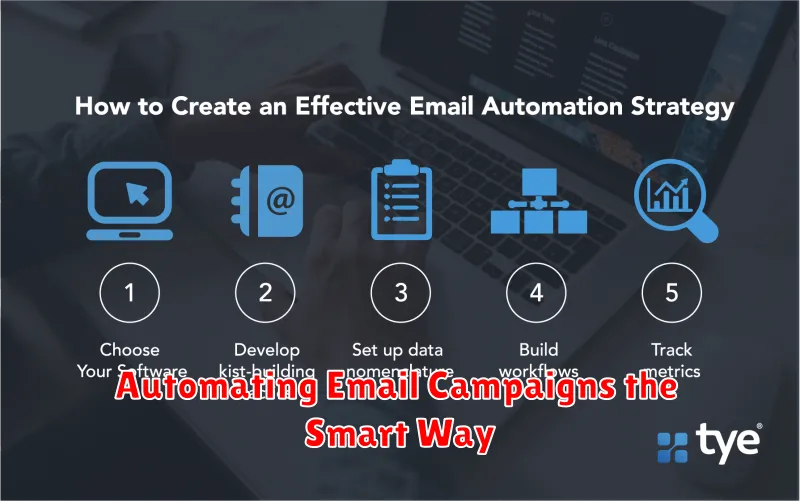
In today’s fast-paced digital world, email marketing remains a cornerstone of successful business strategies. However, managing email campaigns effectively can be time-consuming and complex. Automating email campaigns offers a smart solution, allowing businesses to streamline their communication efforts, nurture leads, and ultimately drive conversions. This article will delve into the intricacies of email campaign automation, providing valuable insights and practical strategies for maximizing your return on investment.
Discover how to leverage the power of automation to create highly targeted and personalized email campaigns that resonate with your audience. From welcome emails and abandoned cart reminders to post-purchase follow-ups and promotional blasts, learn the best practices for crafting effective automated email sequences. We’ll explore the key benefits of email campaign automation, including increased efficiency, improved deliverability, and enhanced customer engagement. Embark on the journey towards smart email marketing and unlock the true potential of your email campaigns.
Benefits of Email Automation
Email automation offers numerous advantages for businesses seeking to enhance their marketing efforts and improve customer engagement. By automating repetitive email tasks, marketers can free up valuable time and resources, allowing them to focus on more strategic initiatives.
Increased Efficiency: Automating email campaigns eliminates the need for manual sending, saving significant time and effort. This allows marketing teams to manage larger volumes of emails and target specific customer segments more effectively.
Improved Targeting: Automation enables precise targeting based on customer behavior, demographics, and preferences. This leads to more relevant and personalized messaging, which in turn increases engagement and conversion rates.
Enhanced Customer Engagement: Through automated workflows, businesses can nurture leads, onboard new customers, and build stronger relationships by delivering timely and relevant content at each stage of the customer journey.
Better Data Analysis and Reporting: Email automation platforms provide valuable data and analytics on campaign performance, enabling marketers to track key metrics, measure ROI, and optimize future campaigns for better results.
Choosing the Right Platform
Selecting the right email automation platform is a critical step in streamlining your communication efforts. The ideal platform aligns with your specific business needs and budget.
Consider these key factors when evaluating different options:
- Ease of Use: A user-friendly interface will simplify campaign creation and management.
- Scalability: Choose a platform that can grow with your business as your contact list expands.
- Integration: Seamless integration with your existing CRM and marketing tools is essential for efficient data flow.
- Analytics and Reporting: Robust reporting features provide valuable insights into campaign performance.
- Pricing: Evaluate pricing models and ensure they align with your budget and anticipated usage.
By carefully considering these factors, you can choose a platform that empowers you to create effective and efficient email campaigns.
Creating Trigger-Based Workflows
Trigger-based workflows are at the heart of effective email automation. They allow you to send the right message at the right time, based on specific subscriber actions or events. This approach moves beyond simple scheduled sends and enables a more personalized and dynamic communication strategy.
Triggers initiate the workflow and can include a variety of actions, such as:
- Signing up for a newsletter
- Making a purchase
- Abandoning a cart
- Clicking a specific link in an email
- Reaching a milestone (e.g., birthday)
Once a trigger is activated, the workflow executes a pre-defined sequence of actions. These actions can include sending emails, adding or removing subscribers from lists, updating subscriber profiles, and more. By carefully selecting triggers and defining the subsequent actions, you can create highly targeted and relevant email experiences that resonate with your audience.
Segmenting Your Audience
Effective email automation relies heavily on delivering the right message to the right people at the right time. This is where audience segmentation comes in. By dividing your subscriber list into smaller, more specific groups, you can tailor your email content to their individual needs and interests.
Consider segmenting your audience based on various factors such as:
- Demographics: Age, gender, location, etc.
- Behavior: Past purchases, website activity, email engagement.
- Preferences: Content preferences, product interests, subscription type.
- Engagement Level: Active subscribers vs. inactive subscribers.
Proper segmentation allows for more targeted messaging, resulting in higher open rates, click-through rates, and ultimately, conversions. It also helps prevent sending irrelevant emails, reducing unsubscribe rates and improving overall customer satisfaction.
Personalizing Content

Personalization is key to effective email marketing. Generic blasts often end up ignored. Tailoring content to individual recipients increases engagement and conversions.
Utilize data collected about your subscribers to create dynamic content. This could include their name, purchase history, or browsing behavior. A simple “Hi [Name]” goes a long way in making an email feel more personal.
Segmentation allows you to group subscribers based on shared characteristics. You can then send targeted campaigns relevant to their specific interests or needs. For example, you might send a different email promoting new arrivals to frequent buyers versus those who haven’t made a purchase recently.
Consider using personalized recommendations. If you have e-commerce data, suggesting products related to past purchases can significantly boost sales. This shows subscribers you understand their preferences and adds value to your communication.
A/B Testing Your Campaigns
A/B testing is a critical component of optimizing email campaigns. It involves sending two slightly different versions (A and B) of your email to separate segments of your audience and analyzing which performs better based on metrics like open rates, click-through rates, and conversions.
Key elements to A/B test include:
- Subject lines: Test different wording, lengths, personalization, and emojis.
- Sender name: Experiment with variations, such as using a person’s name versus your company name.
- Email content: Compare different copy, layouts, calls to action, and image placements.
- Send times: Determine the optimal time to reach your audience by testing different days and times.
By systematically testing these elements, you can identify what resonates best with your subscribers and refine your campaigns for maximum impact.
