
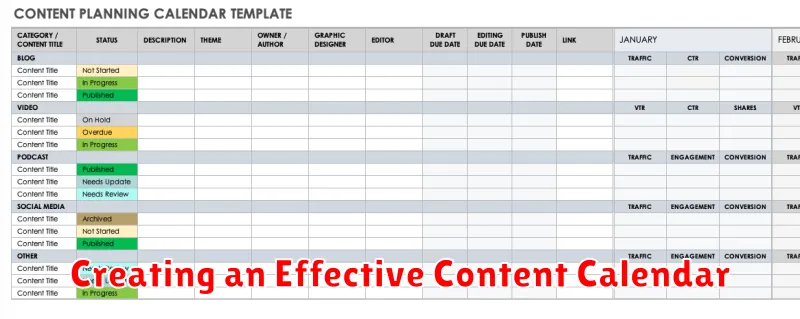
In today’s digital landscape, a content calendar is an indispensable tool for any business or individual seeking to establish a consistent and effective online presence. A well-structured content calendar provides a roadmap for your content marketing efforts, ensuring regular publication, targeted messaging, and ultimately, increased audience engagement. Whether you’re managing a blog, social media platforms, or email campaigns, creating an effective content calendar is crucial for maximizing your reach and achieving your content marketing goals. This article will guide you through the essential steps in developing and implementing a content calendar that works for you.
Learn how to transform your content marketing strategy from chaotic to consistent with a powerful content calendar. We’ll explore the key components of a successful content calendar, offering practical tips and strategies for planning, organizing, and scheduling your valuable content. From identifying your target audience and selecting optimal content formats to streamlining your workflow and measuring results, this guide provides a comprehensive overview of content calendar creation. Discover how a well-crafted content calendar can empower you to deliver compelling content that resonates with your audience, drives traffic, and achieves tangible results.
Benefits of a Content Calendar
A content calendar offers numerous advantages for individuals and organizations seeking to enhance their content marketing strategies. It provides a centralized platform for planning, scheduling, and managing content creation and distribution, leading to improved organization and streamlined workflows.
With a content calendar, you can maintain consistency in your posting schedule, which is crucial for audience engagement and building a loyal following. This consistency also contributes to improved search engine optimization (SEO) performance.
A content calendar also facilitates better content quality. By planning in advance, you have more time for research, writing, and editing, resulting in more polished and impactful content. This advanced planning also helps to identify content gaps and ensure a diverse range of topics are covered.
Finally, a content calendar promotes collaboration and communication among team members. Everyone can stay informed about upcoming content, deadlines, and responsibilities, resulting in smoother operations and a more cohesive content strategy.
Choosing Topics Strategically
A well-structured content calendar hinges on strategically chosen topics. This involves understanding your target audience and their needs. Consider what information they are seeking and how your content can provide value.
Keyword research is crucial. Identify relevant keywords with high search volume and low competition. This helps your content rank higher in search engine results and reach a wider audience. Tools like Google Keyword Planner can assist in this process.
Stay updated on industry trends. Explore current events and popular discussions related to your niche. This allows you to create timely and relevant content that captures audience interest.
Consider the different stages of the buyer’s journey. Create content that addresses each stage, from awareness and consideration to decision and action. This comprehensive approach nurtures leads and guides them towards conversion.
Balancing Evergreen and Trendy Content
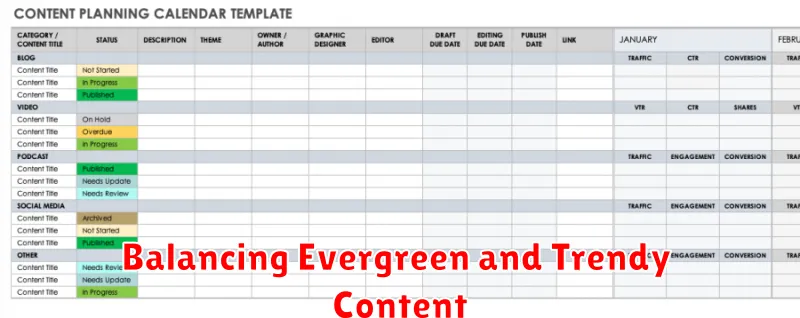
A successful content calendar necessitates a strategic blend of evergreen and trendy content. Evergreen content provides long-term value, remaining relevant and attracting traffic over time. Topics like “How to Write a Blog Post” or “Best Practices for Social Media Marketing” are examples of evergreen content that continually draws an audience.
Trendy content, conversely, capitalizes on current events, viral trends, or seasonal topics. While offering a surge in short-term traffic, its lifespan is limited. Think about content related to a specific holiday, a popular meme, or a breaking news story. This type of content requires quick creation and distribution to maximize impact.
Finding the right balance ensures a consistent flow of traffic. Evergreen content establishes a strong foundation, while trendy content injects freshness and topical relevance, attracting a wider audience. A well-structured content calendar allocates resources to both, maximizing reach and engagement.
Setting Publishing Frequency
Establishing a consistent publishing frequency is crucial for maintaining audience engagement and maximizing the impact of your content calendar. Consistency builds anticipation and trains your audience to expect new content regularly. However, the ideal frequency depends on several factors.
Consider your available resources. Creating high-quality content takes time and effort. An overly ambitious schedule can lead to burnout and a decline in content quality. Start with a manageable frequency and gradually increase it as your resources allow.
Your target audience also plays a significant role. Some audiences expect daily updates, while others are satisfied with weekly or monthly content. Research your target audience’s preferences and consumption habits to determine the optimal posting frequency.
The type of content you produce also influences the ideal publishing frequency. Short, easily digestible content can be published more frequently than in-depth, long-form content, which requires more time to create and consume.
Finally, analyze your results. Track your engagement metrics to understand which posting frequency generates the most interaction and drives the best results. Adjust your schedule accordingly as you gather more data.
Tracking Progress and Performance
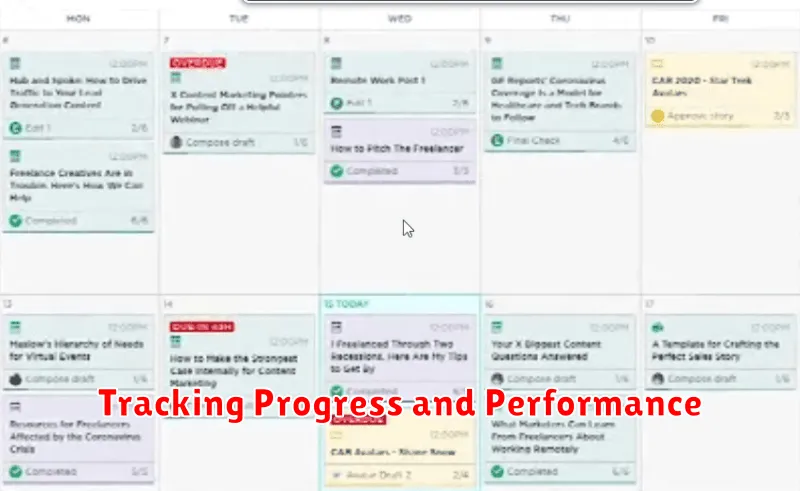
Tracking the progress and performance of your content calendar is crucial for optimizing your content strategy. This involves monitoring key metrics to understand what’s working and what needs adjustment.
Key Performance Indicators (KPIs) will vary depending on your goals, but some common metrics include:
- Website traffic: Monitor increases or decreases in traffic attributed to your content.
- Engagement: Track likes, shares, comments, and time spent on page.
- Lead generation: Measure how much content contributes to capturing leads.
- Conversion rates: Analyze how effectively your content drives desired actions (e.g., sales, sign-ups).
Regularly review your content calendar’s performance against these KPIs. Use analytics tools to gather data and identify trends. This data-driven approach will allow you to refine your content strategy, ensuring you are meeting your objectives and maximizing your return on investment.
Adjusting Based on Results
A content calendar isn’t a static document. It requires regular review and adjustments based on performance. Analyzing the results of your content efforts is crucial to maximizing effectiveness. This means tracking key metrics.
Key metrics to consider include website traffic, engagement (likes, shares, comments), lead generation, and conversions. Establish a consistent reporting schedule, whether weekly or monthly, to monitor these metrics.
Identify top-performing content. What resonated with your audience? Replicate successful strategies and consider creating more content on similar topics. Conversely, analyze underperforming content. Why didn’t it meet expectations? Was the topic irrelevant, the timing off, or the format ineffective? Use these insights to avoid similar pitfalls in the future.
Be prepared to adapt your calendar. If certain content types consistently underperform, consider shifting your focus. If current events or industry trends emerge, adjust your calendar to capitalize on these opportunities. Flexibility is key to a successful content calendar.
