
Mastering the art of persuasive writing is essential for any successful marketing campaign. Copywriting formulas provide a framework for crafting compelling content that resonates with your target audience and drives conversions. This article explores proven copywriting formulas that always work, offering practical insights and actionable strategies to elevate your writing and achieve measurable results. Whether you’re a seasoned marketer or just starting out, understanding these copywriting formulas can significantly enhance your ability to influence and persuade.
From the classic AIDA formula to the more contemporary PAS formula, this guide delves into the core principles behind effective copywriting. Learn how to structure your content using these time-tested copywriting formulas to capture attention, generate interest, create desire, and ultimately, inspire action. By implementing these copywriting formulas that always work, you can transform your writing from simple text into a powerful tool for achieving your marketing objectives. Unlock the secrets to crafting compelling copy and witness the transformative impact on your brand’s success.
What Makes Good Copy?
Good copywriting is more than just stringing words together. It’s about crafting a persuasive message that resonates with the target audience and drives a desired action. Several key elements contribute to effective copy.
Clarity is paramount. Your message must be easily understood. Avoid jargon or overly complex language. Focus on conveying information concisely and directly.
Relevance is also crucial. The copy must speak directly to the reader’s needs, interests, and pain points. Understanding your target audience is essential for crafting relevant copy.
Compelling language is the key to engaging readers. Use strong verbs and vivid descriptions to create a memorable experience. Evoke emotion and build a connection with the audience.
A strong call to action is essential for driving conversions. Tell the reader what you want them to do, whether it’s making a purchase, signing up for a newsletter, or visiting a website.
AIDA Explained
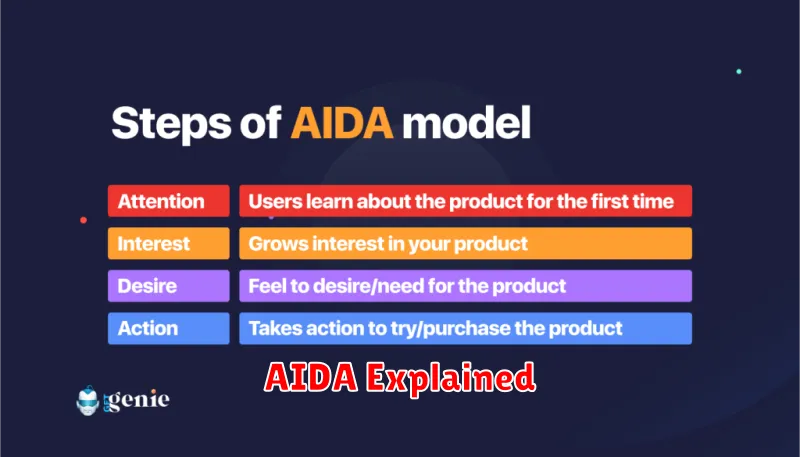
AIDA is a time-tested marketing model that describes the steps a customer goes through before making a purchase. It stands for Attention, Interest, Desire, and Action.
The Four Stages of AIDA
Attention: This stage focuses on grabbing the potential customer’s attention. This can be achieved through a compelling headline, a striking visual, or a provocative question.
Interest: Once you have their attention, you need to pique their interest. Provide information that is relevant to their needs and highlights the benefits of your product or service.
Desire: This stage is about creating a desire for your product or service. Showcase its value proposition and demonstrate how it can solve their problems or improve their lives. Testimonials, case studies, and strong calls to action can be effective here.
Action: The final stage is to encourage the customer to take action. This could be anything from making a purchase, signing up for a newsletter, or requesting more information. Make it clear what you want them to do and make it easy for them to do it.
PAS (Problem-Agitate-Solution)
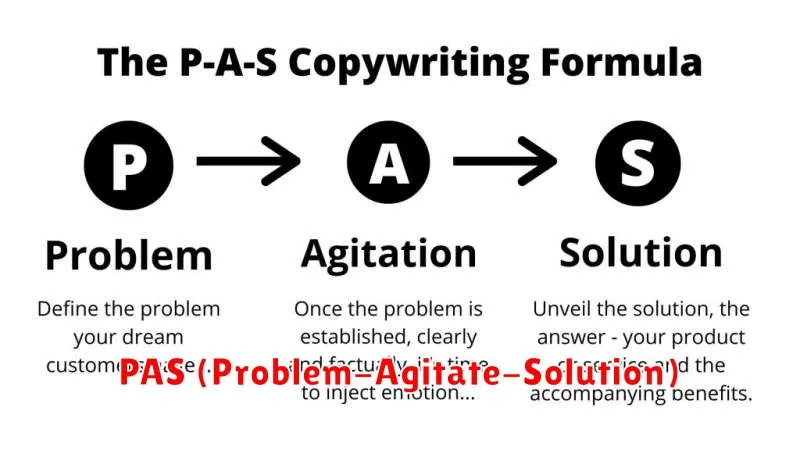
The PAS formula is a powerful copywriting technique that focuses on presenting a problem, agitating it, and then offering a solution. It’s a highly effective method for grabbing the reader’s attention and persuading them to take action.
First, you identify a problem your target audience faces. This should be a pain point they can readily relate to. Be specific and concise in your description. For example, “Struggling to manage your overflowing inbox?”
Next, agitate the problem. Amplify the pain by highlighting the negative consequences of not addressing the issue. This creates a sense of urgency and motivates the reader to seek a solution. Continuing the example, “A cluttered inbox leads to missed deadlines, lost opportunities, and increased stress.”
Finally, present your product or service as the solution to their problem. Clearly explain how it alleviates their pain and delivers the desired outcome. For instance, “Our email management software automatically filters, organizes, and prioritizes your emails, freeing up your time and reducing stress.”
Using Testimonials in Copy
Testimonials are a powerful tool in copywriting. They provide social proof, building trust and credibility with potential customers. By showcasing real experiences and positive outcomes, testimonials can significantly influence purchasing decisions.
Effective implementation of testimonials requires strategic placement and selection. Choose testimonials that address specific concerns or highlight key benefits of your product or service. Short, impactful quotes often perform best.
Consider varying the format of your testimonials. Traditional text-based testimonials are effective, but you can also explore video testimonials or social media posts for added engagement. Always ensure you have permission to use the testimonial and accurately attribute it to the source.
Power Words to Try
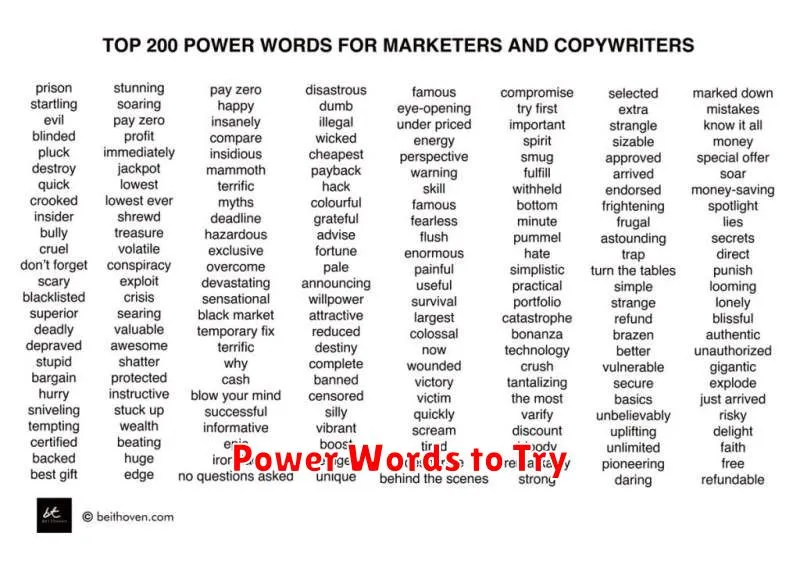
Power words are persuasive words that trigger a psychological or emotional response. Incorporating them strategically into your copy can significantly enhance its effectiveness and drive conversions.
Words that evoke curiosity: Secret, exclusive, discover, unveiling, inside, limited.
Words that create urgency: Now, today, only, instant, fast, limited-time, don’t miss out.
Words that imply exclusivity: Members-only, premium, elite, VIP, special access, insider.
Words that emphasize value: Guaranteed, proven, results, save, free, easy, best, ultimate.
Words that evoke emotion: Powerful, amazing, incredible, ultimate, dream, life-changing, essential.
Call-to-Action Examples
A compelling call-to-action (CTA) is crucial for converting interest into action. It directs the reader towards the desired outcome, whether it’s making a purchase, signing up for a newsletter, or downloading a resource.
Here are some effective CTA examples demonstrating different approaches:
Direct CTAs:
-
“Shop Now” – Clear and concise, ideal for e-commerce.
-
“Get Started Today” – Creates a sense of urgency and encourages immediate action.
-
“Learn More” – Suitable when providing additional information is key.
Benefit-Driven CTAs:
-
“Claim Your Free Trial” – Highlights a valuable offer.
-
“Download Your Free Guide” – Offers a valuable resource in exchange for contact information.
Urgency-Based CTAs:
-
“Limited Time Offer – Act Now!” – Creates a sense of scarcity and encourages immediate action.
-
“Don’t Miss Out – Register Today!” – Emphasizes the potential loss of missing the opportunity.
Remember to tailor your CTA to your specific audience and offer. A strong CTA should be clear, concise, and compelling.
