
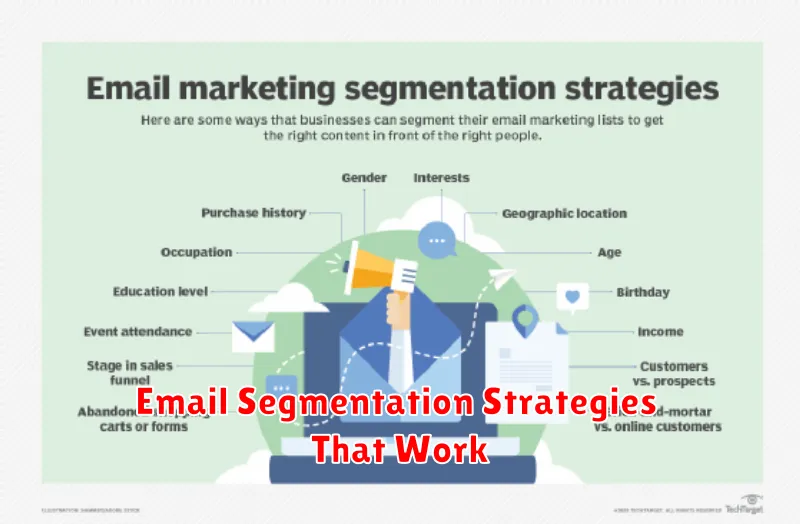
In today’s digital marketing landscape, email remains a powerful tool for reaching and engaging customers. However, simply sending mass emails to your entire subscriber list is no longer an effective strategy. To truly maximize your email marketing ROI, you need to implement email segmentation strategies. Email segmentation allows you to divide your audience into smaller, more targeted groups based on shared characteristics, enabling you to deliver more relevant and personalized messages. By tailoring your content to specific segments, you can significantly increase open rates, click-through rates, and ultimately, conversions.
This article explores proven email segmentation strategies that work. We’ll delve into various segmentation methods, from basic demographic segmentation to more advanced behavioral and psychographic segmentation. Learn how to identify key segments within your audience, leverage data to create highly targeted campaigns, and measure the success of your segmentation efforts. Discover how effective email segmentation can transform your email marketing from a generic broadcast into a personalized communication channel that resonates with each individual subscriber, driving engagement and fostering stronger customer relationships.
Understanding Email Segmentation
Email segmentation is the process of dividing your email subscriber list into smaller, more defined groups based on shared characteristics. This allows you to send more targeted and relevant emails, which in turn improves engagement and conversions.
Instead of sending a generic email blast to your entire audience, segmentation empowers you to tailor your messaging to specific segments. Imagine sending a promotion for a new product to customers who have previously purchased similar items. This personalized approach is much more effective than sending the same promotion to someone who has never interacted with your brand before.
Key benefits of email segmentation include increased open rates, click-through rates, and conversions, along with reduced unsubscribe rates and spam complaints. Ultimately, segmentation helps you foster stronger customer relationships by delivering content that truly resonates with each individual.
Collecting Relevant Subscriber Data
Effective email segmentation relies on having the right data. Collecting relevant subscriber data is crucial for creating targeted segments. This data informs your strategy, allowing you to tailor content to specific groups and boost engagement.
Consider collecting data such as demographics (age, location, gender), engagement metrics (open rates, click-through rates), website activity (pages visited, products viewed), and purchase history. This information helps you understand your subscribers’ interests and behaviors.
Methods for collecting data include signup forms, surveys, preference centers, and tracking website behavior through cookies. Ensure you’re transparent about how you collect and use subscriber data, prioritizing data privacy and following relevant regulations.
Creating Targeted Campaigns
Once your segments are defined, the next crucial step is crafting targeted campaigns. This involves tailoring your email content to resonate specifically with each segment’s unique characteristics and needs. Relevance is key here.
Consider these factors when creating targeted campaigns:
- Segment Demographics: Age, location, and other demographic data can inform the tone and style of your messaging.
- Past Behavior: Purchase history, website activity, and email engagement provide insights into preferences and interests.
- Campaign Goals: Align your messaging with the specific objective of each campaign, whether it’s driving sales, promoting a new product, or increasing engagement.
By addressing these elements, your targeted campaigns will be significantly more effective in achieving desired outcomes.
Using Behavioral Triggers
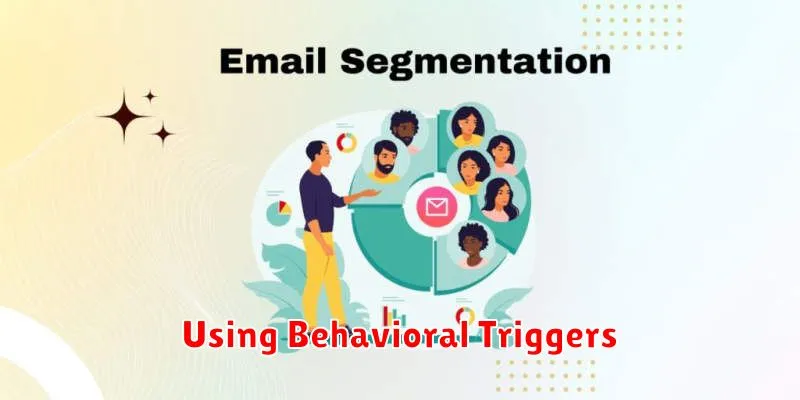
Behavioral triggers offer a powerful way to send highly relevant emails based on specific user actions. This method allows you to engage with subscribers at the most opportune moments, increasing the likelihood of conversion and fostering a stronger connection.
Key behavioral triggers include:
- Website Activity: Monitoring page views, product browsing, and downloads can reveal user interests and purchase intent. Triggered emails can then offer personalized recommendations or incentives.
- Email Engagement: Opening emails, clicking links, or forwarding content demonstrates active interest. Follow-up emails can provide additional information, exclusive offers, or related content.
- Shopping Cart Abandonment: Sending reminders to customers who leave items in their cart can effectively recover lost sales. These emails often include incentives or highlight the benefits of completing the purchase.
- Purchase Activity: Post-purchase emails can express gratitude, offer related product suggestions, or request feedback. This strengthens customer relationships and encourages repeat business.
By leveraging behavioral triggers, you can deliver timely and targeted messages that resonate with your audience, resulting in improved engagement and conversions.
Personalization Techniques
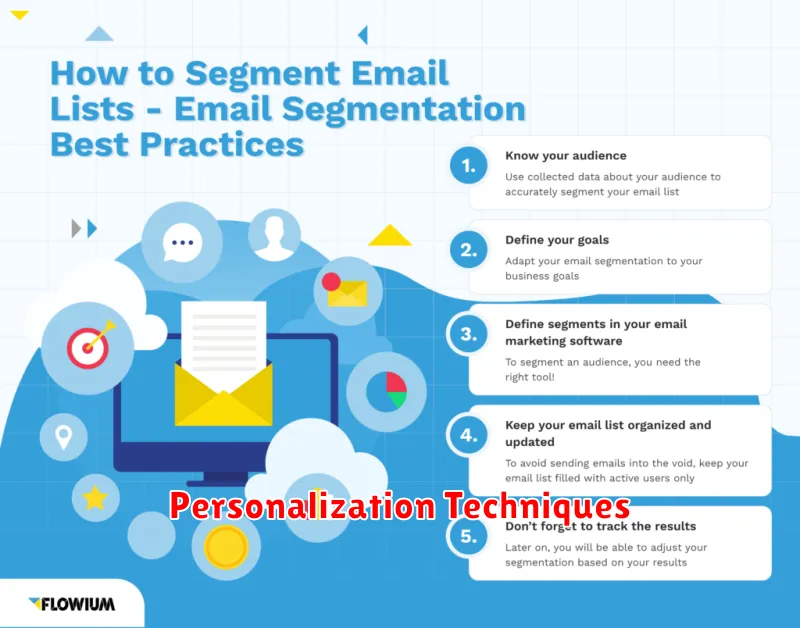
Once you’ve segmented your audience, the next step is to personalize your email content. Personalization goes beyond simply inserting the recipient’s name. It involves tailoring the message to resonate with their specific needs and interests based on the segment they belong to.
Several techniques can enhance personalization:
- Dynamic Content: Display different content blocks within the same email based on segment attributes. For example, showcase products related to past purchases.
- Targeted Offers: Present special promotions or discounts relevant to a segment’s demonstrated preferences or demographics.
- Personalized Recommendations: Suggest items or content that align with individual user behavior and browsing history within a specific segment.
- Geo-targeting: Adapt language, currency, and offers based on the recipient’s location, which can be a segment defining factor.
By implementing these personalization techniques, your emails become more engaging and effective, resulting in higher open rates, click-through rates, and conversions.
Testing and Optimizing Segments
Creating segments is only the first step. Continuous testing and optimization are crucial for maximizing their effectiveness. This involves analyzing the performance of your email campaigns for each segment and making adjustments as needed.
A/B testing is a powerful tool for optimization. Test different subject lines, email content, sending times, and call-to-actions to determine what resonates best with each segment. Track key metrics such as open rates, click-through rates, and conversion rates to identify areas for improvement.
Regularly review your segments’ performance. Look for trends and changes in engagement. Perhaps a segment that once performed well is now declining. This might indicate a need to refine the segment criteria or adjust the messaging.
Key metrics to monitor include:
- Open Rate
- Click-Through Rate (CTR)
- Conversion Rate
- Unsubscribe Rate
